
How Non-Committal Is Your Wardrobe?
let's talk about the neither here-nor-there pieces

Hi Readers,
I’m back with another wardrobe blindspot that might be sitting in your closet!
What’s a wardrobe blindspot?
They are the often unseen patterns you repeat in your purchases, or within your wardrobe, that may be keeping you feeling stuck — even when your closet is full.
And you aren’t alone! After spending time in A LOT of closets, I’ve picked up on some of the larger themes that can feel like roadblocks when it comes to getting dressed each day.
Here are my first top 10 if you want to check them out!

A blindspot that’s been coming up a lot in recent client styling sessions is this idea of “non-committal” pieces.
When I’ve spoken about non-committal pieces in past newsletters, I’ve often referred to it as being like the anti-goldilocks effect.
The “goldilocks effect “usually refers to the tendency to seek a ‘just right’ option. So in the case of non-committal purchases, it means we are doing the opposite which is settling and buying pieces that are in the middle ground of neither here-nor-there.
Here are two quick and easy visuals of how this might come to life in your wardrobe -
Maybe you are looking for an everyday relaxed crew neck tee that can stand on it’s own but still looks great under a sweater or an outer layer.
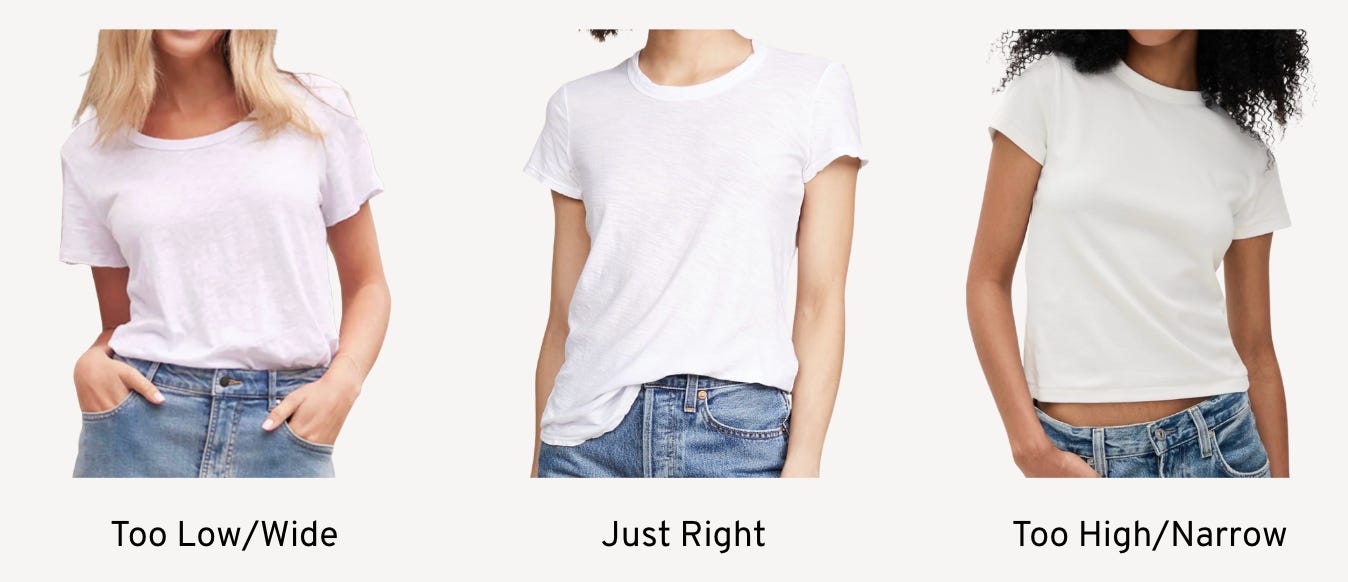
With the above example, it’s not to say that the other options are bad if that’s what you are looking for. And it’s also not to say that you need one tee that can do it all but the more you can articulate what you want your garments to do for you, the clearer the options become and the clearer your POV becomes. If you feel the neckline is too high or too wide but you still keep it, you’ll end up either: A) never wanting to reach for it or B) putting it on, not liking how it looks or feels on you, and shoving it back in your drawer.
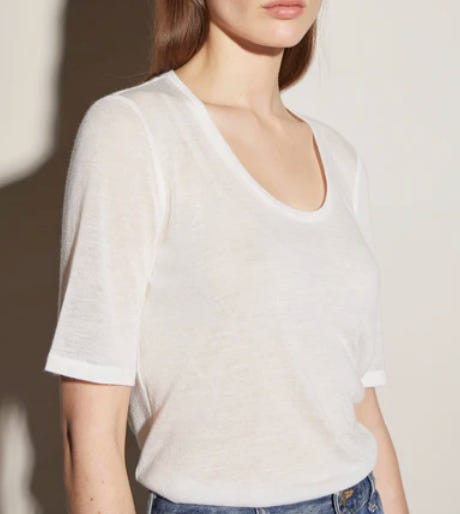
Sticking with the t-shirt example, let’s say you wanted an open neckline, rather than the first option above that’s kind of in-between, I’d rather you go this direction which feels more intentional and has a stronger POV. If you want an open neckline, commit to that open neckline!
Another way I see this come through a lot -
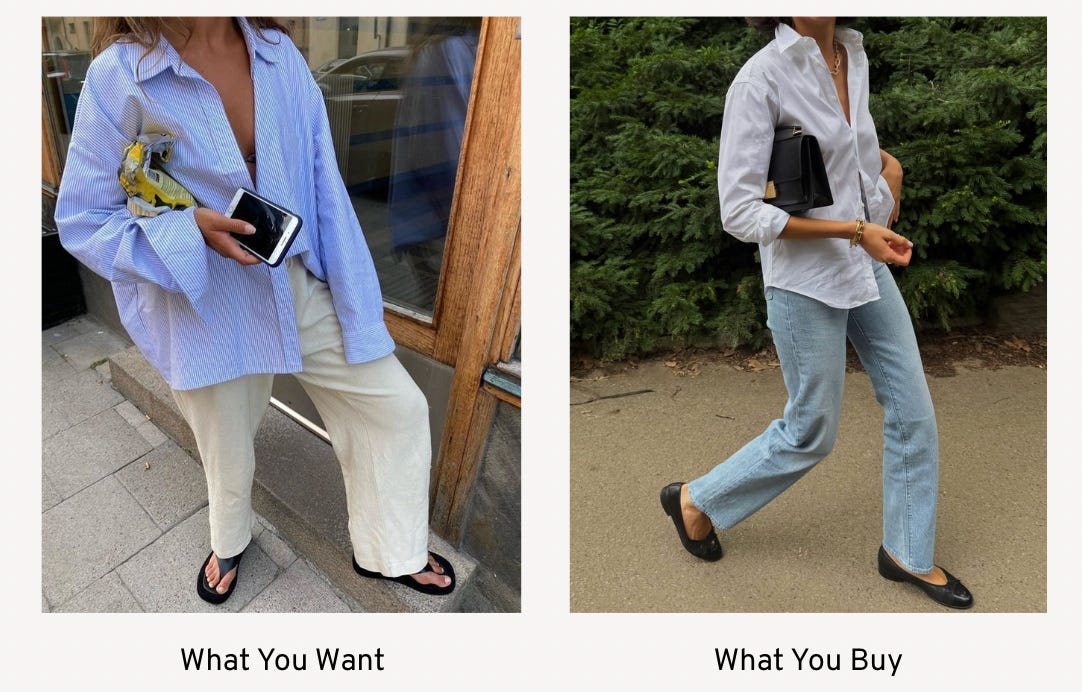
Other ways this might come up in your own wardrobes and I’ll share more detailed examples below:
The “close enough” or “almost right” effect
such as garments that are too thin or too thick, or jeans that are too cropped
the thing you bought vs what you wanted (ie: trade down vs trade-off)
The “singular” pieces
like a pair of pants you can only wear with one type of shoe
The “misalignment” impact (when you buy pieces that don’t quite feel like you or don’t match your lifestyle)
I call this the ‘influencer’ effect or buying for an old version of you
Aesthetic limbo
when your purchases aren’t quite nailing the aesthetic you want
What all these types of examples equate to is a closet full of “maybes”. Those maybes can make it feel like a guessing game every time you get dressed.
“This one maybe fits me right now”…”This one maybe will be an ok length with this shoe”….”This dress will maybe work if I can wear with this type of cardigan”
The more that pieces can work for us and support our lives — how we move and feel in our clothes, how it fits seamlessly into our lifestyle — the less mental gymnastics we experience every time we get dressed!
Two quick caveats:
These non-committal pieces are different than owning something that has a specific intent. The pieces you bought for a specific lever in your styling toolkit or for a purpose within your wardrobe. You may not wear it all the time, and you may only style it a few ways, but you know exactly why you wear it when you do. It has a clear purpose and POV in your wardrobe. That’s clarity, not a lack of commitment!
We are all at different points in our style journey so depending on where you are in your life, sometimes blindspots aren’t blindspots. They are just the best option based on where you’re at. The “good enough” is good enough for right now and that is totally A-OK!
Budget - I’ve worked with younger clients who are new grads in their first real jobs. They want to look the part but have a smaller budget, or maybe they want to prioritize elsewhere, so their best option might be a synthetic blend set from Mango. It might not be the absolute perfect piece but it meets them where they are at right now and they still feel good in it and it helps them get dressed each day.
Transitional phase - Maybe you recently moved to a completely different city or environment and don’t know what you exactly need yet, or maybe you are coming in or out of pregnancy and don’t want to fully commit to a new wardrobe. I’ve also had clients who are experiencing large weight fluctuations and I don’t think it’s realistic that they find the perfect 10/10 pieces at this stage when they most likely are going to be be a different size 6 months down the road. In these cases, I work with them on a priority list and we will choose from good vs better alternatives (or leverage accessories more up front) because the goal is to help them get dressed and feel good today. Once you build a foundation that works for you, even if it’s a temporary one, can bring more clarity when it comes time to invest in new purchases. (ie: a good enough piece can be something you end up getting a lot of use out of and if/when you are ready to upgrade it, you can do so confidently!)
Also, this does not mean that everything in your closet needs to be 100% perfect!
When people talk about having to love everything in your wardrobe, I don’t think that needs to apply to our FULL wardrobe.
For example, all of my workout/walking clothes are super basic and I’ve worn the same things for 10+ years. When I need to replace it, I replace it with the same item.
Do I love them? Not really. Do I care? No.
My workout clothes don’t need to help me express my creativity. I just need them to be background supporters and not be a distraction while I workout. Sure, I could invest in workout clothes that make me feel cute but it’s not a priority in my wardrobe. That’s what I mean when I say it’s a trade-off decision, not a trade down!
Same goes for functional pieces like my rain coat or rain boots.
But the pieces that you’ll want to reach for everyday, that make getting dressed easier, those you should love.
If you wear jeans and tees each day, I want you to feel really good in your jeans and tees!!
And regardless of where you are in your style journey, I think it’s important to understand what your deal breakers are. That’s what I think defines an ok purchase from a great one. More on that below.
Here’s what we’ll cover:
different types of non-committal case studies from clients
hidden mindsets behind these purchases + why you keep them
my thought process behind my “good enough” vs “not quite right” pieces (ie: trade-off vs trade down choices)
identifying your deal breakers are so you can make better purchases
bonus: some quick tailoring tips (because I’ve noticed there are a lot of you who aren’t buying the pants you want because they are too long, or aren’t wearing the gorgeous pants in your closet because you don’t know how to tailor them!)
